
Connecting people to your place — how digital trails are helping towns and landscapes reveal their stories and engage more visitors
Every place has stories worth telling. Historic market towns where centuries of trade and culture are embedded in the streets and buildings. Areas of Outstanding Natural Beauty where the landscape itself is the attraction. Heritage sites and museums with collections and stories that visitors walk past without truly seeing. The challenge — for all of them — is the same: how do you connect visitors with the stories of a place in a way that is engaging, accessible and truly does them justice?
The challenge facing towns and landscapes
These are the places where the richest stories often go untold — spread across multiple organisations, sites and landscapes. A single leaflet or signpost can only do so much, and there are times where physical interpretation panels can intrude on the landscape, are expensive to install and maintain, and can quickly go out of date. In many protected landscapes and historic environments, they are simply not permitted due to planning regulations and conservation restrictions.
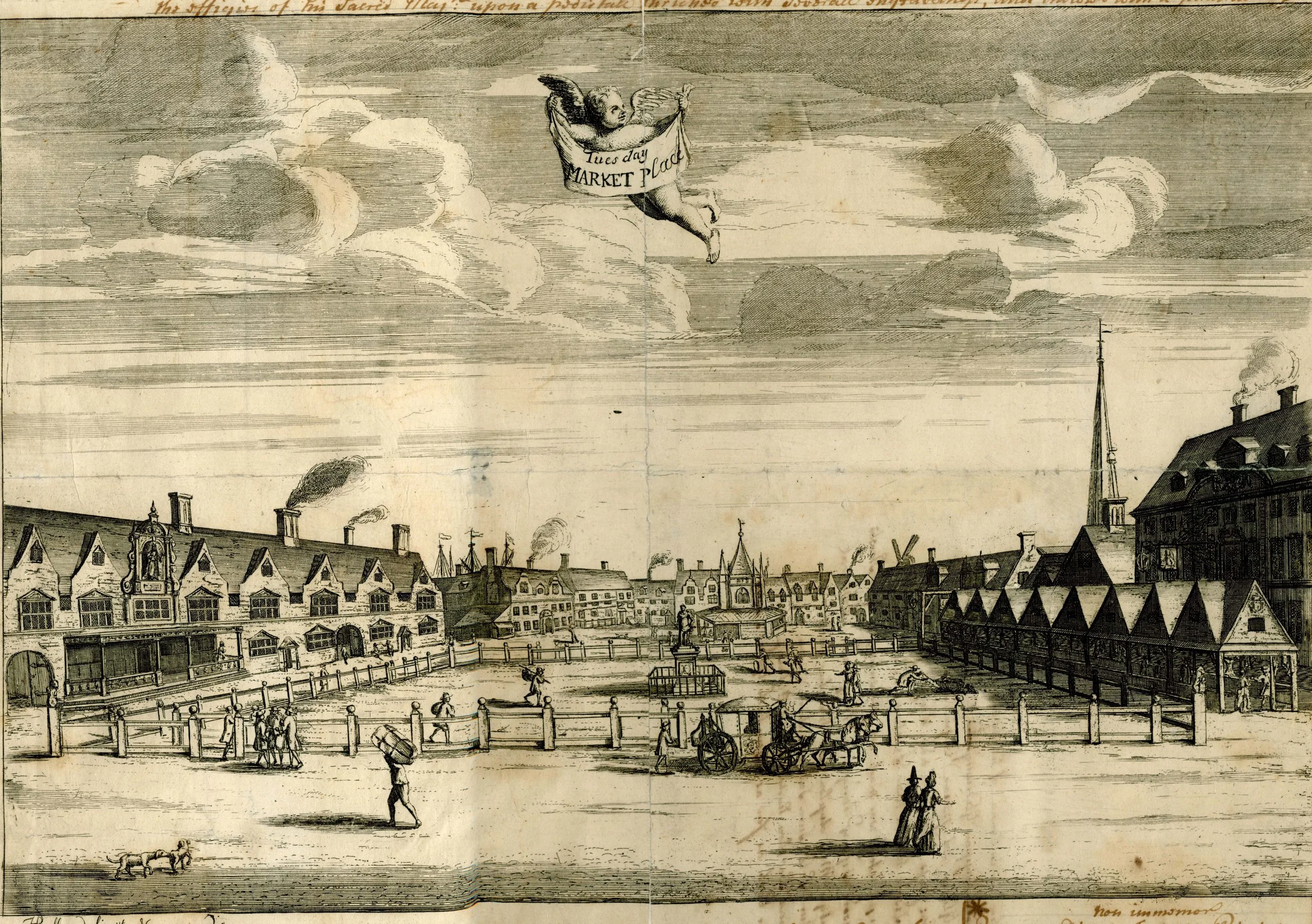
Old print of King's Lynn Market Square, as featured in the Stories of Lynn app.
King's Lynn — bringing coherence to a town full of stories
King's Lynn is one of England's most historic market towns. Medieval merchants, extraordinary architecture, centuries of trade and a dramatic relationship with the sea have shaped a place full of remarkable stories. Those stories are held by many different organisations — the Borough Council, the Stories of Lynn Exhibition, the Town Hall, individual buildings and streets across the town centre. The ambition was to bring them together into a single, coherent visitor engagement experience that connected people with the full richness of the town.
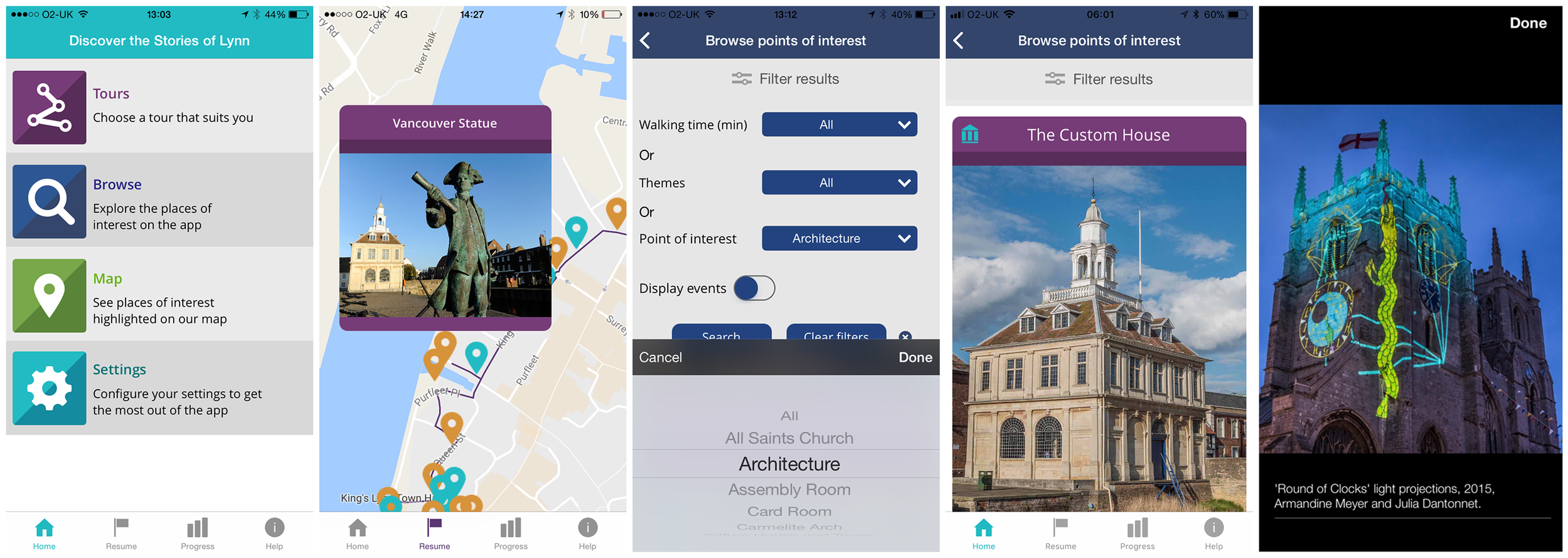
Selection of screenshots from the Stories of Lynn app, King's Lynn, Norfolk.
We worked with King's Lynn and West Norfolk Council to create Stories of Lynn — a media-rich mobile tour guide that made the town itself the attraction. Four thematic trails, 57 points of interest, GPS-triggered content outdoors and Bluetooth beacons indoors — all accessible on a visitor's own phone, at their own pace.
The result? 2,700+ downloads and an experience that is still actively used by visitors to King's Lynn today.
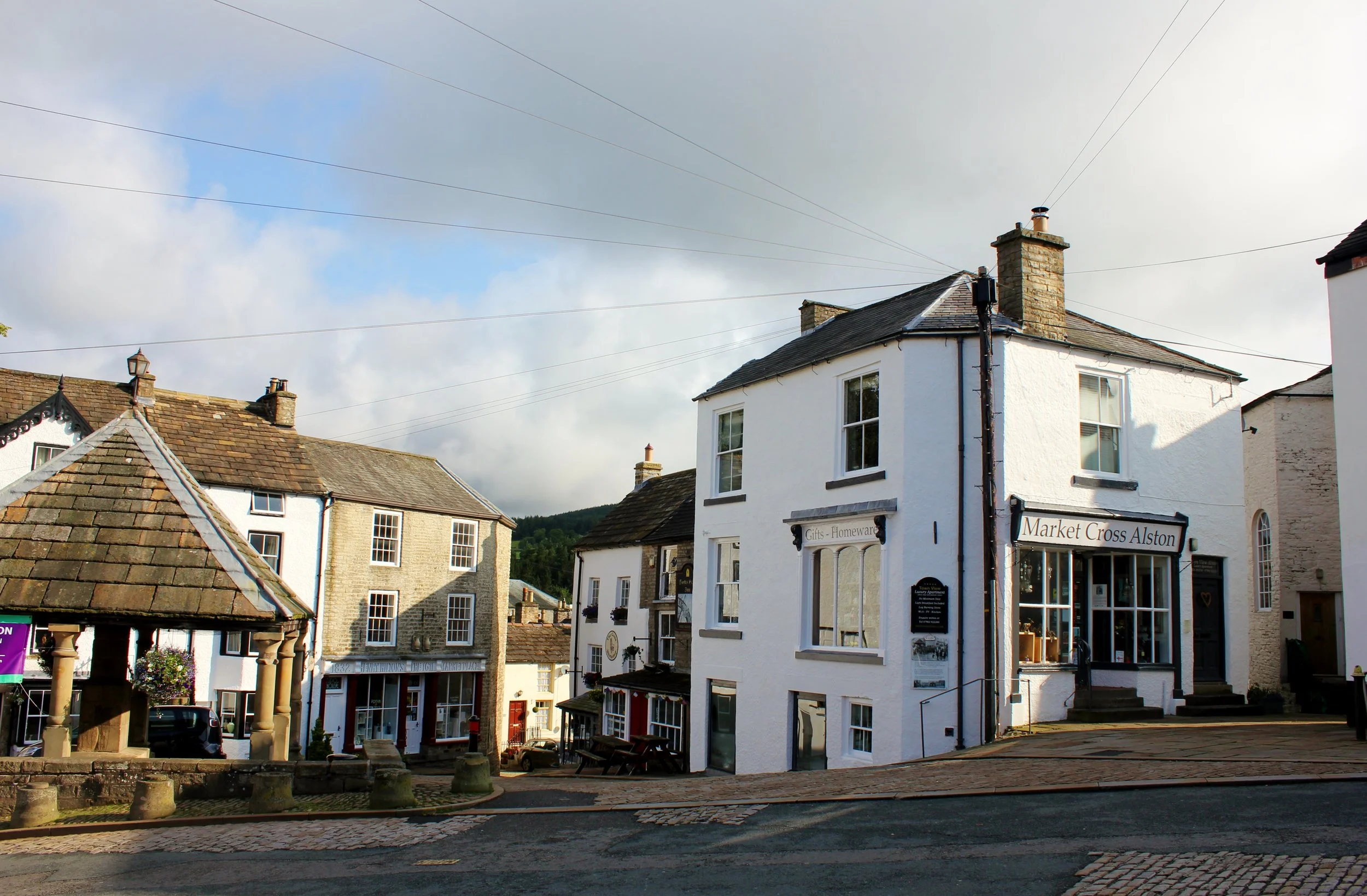
Market Cross, Alston, North Pennines Area of Outstanding Natural Beauty, Cumbria.
Alston — uncovering stories visitors didn't know existed
Alston is one of two towns that claim to be the highest market town in England, set in the heart of the North Pennines Area of Outstanding Natural Beauty. Beautiful, remote and full of history — but reliant on summer visitor income and the draw of the South Tynedale Railway to bring families to the area.
The North Pennines AONB Partnership wanted to give families a compelling reason to explore more of the town and stay longer. We created Alston Explorer — a GPS-guided digital walking trail developed with Year 6 pupils from Samuel King's School, who helped identify points of interest, map the trails and design the rewards system.
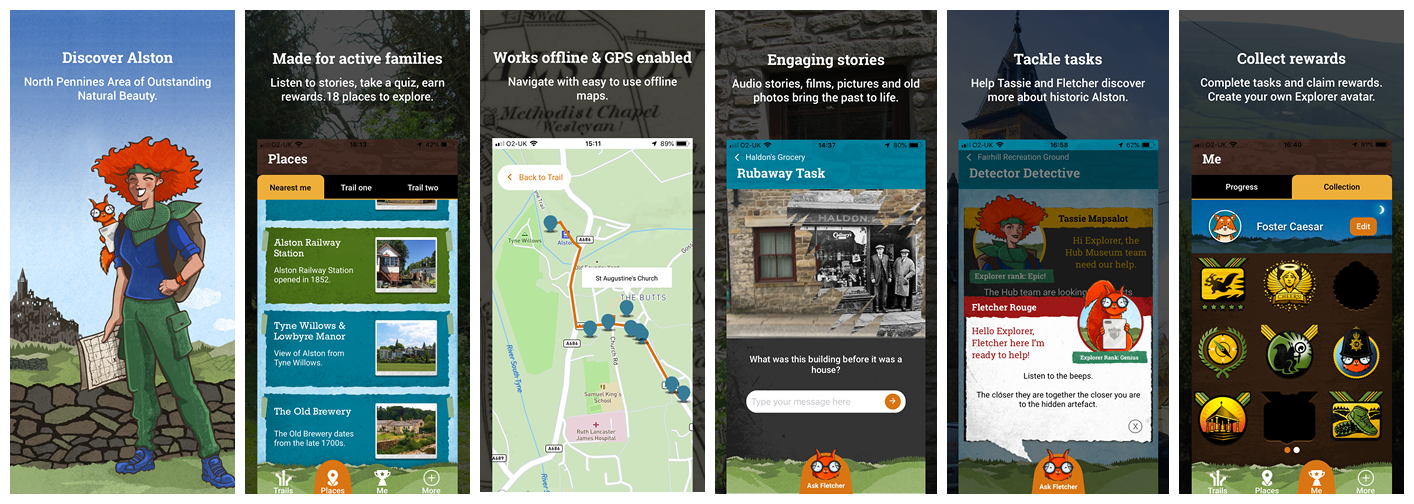
Selection of screenshots from Alston Explorer, North Pennines Area of Outstanding Natural Beauty, Cumbria.
What these two projects have in common
King's Lynn and Alston are very different places — one a historic port town, the other a remote Pennine market town. But the challenge was the same: how do you connect visitors with the stories of a place that are hidden in plain sight — embedded in the streets, buildings and landscape, but difficult to uncover without the right guide?
Digital walking trails answer that question in a way that printed materials, signage and traditional interpretation simply can't. They bring multiple stories together into a single, coherent experience — and using GPS, they deliver location-specific content at the exact moment a visitor is standing in the place those stories belong to. The history, the nature, the people — presented at the precise spot they are connected to, on the visitor's own phone. And they work offline, so poor signal is never a barrier.
Filtering systems add another layer of personalisation. Visitors can be presented with routes and content that are suited to their specific needs and interests — whether that's a shorter, more accessible route for visitors with limited mobility, a family-friendly trail with tasks and rewards, or a themed route focused on a particular period of history or aspect of the natural environment. One experience, many different ways to explore it.
All our digital trail experiences are designed to scale. Start with one trail and grow as your confidence, audience and evidence of impact develops.
The opportunity for local authorities, National Parks and landscape organisations
If you manage a town, a landscape or a community with stories worth telling — and you want to give visitors more reasons to explore, stay longer and come back — a digital walking trail could be one of the most cost-effective investments you make in your local tourism offer.
Digital experiences start from £2,900. We can work with you on a project budget or a regular payment plan — whichever works best for your organisation and funding cycles.
All projects start with a conversation.